
Removing a benign (non-cancerous) mole can help restore your confidence and comfort with your skin, whether it’s snagging on clothing or irritating. At the same time, shaving is simply something you prefer to have removed; our team provides safe and professional solutions tailored to your needs.
Benign moles are common skin growths made up of clusters of skin cells. They are generally harmless anddon’tot turn into cancer. People often choose to have them removed for cosmetic reasons, or they cause irritation or discomfort.
Our Approach to Mole Removal.
We use advanced non-surgical treatment methods, primarily cryotherapy with a specialised Cryopen device.
Yes, we always ensure that a mole appears benign before proceeding with any treatment. If there are signs of concern, such as changes in shape, color, or size, or if the mole is itching or bleeding, we will refer you for a proper medical assessment first.
Possible side effects:
Healing & Aftercare
After treatment, the area may develop redness or a small scab. Follow these care steps for the best results:
Most people return to normal activities immediately following their appointment.
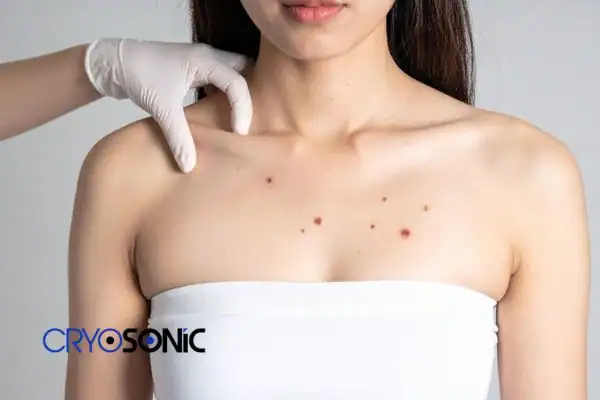
What is a benign mole?
A benign mole is a non-cancerous skin growth that poses no health risks. Individuals may choose to have them removed for cosmetic purposes or to improve comfort.
Does mole removal hurt?
Most clients experience only mild discomfort, such as a cold or tingling sensation. This cold feeling often numbs the area, making anaesthesia unnecessary in most cases.
How long does the treatment take?
Treatment for a single mole usually only takes a few seconds. A whole appointment, including assessment, typically takes 15–30 minutes, depending on how many lesions are treated.
Will I have a scar?
While it’s impossible to guarantee zero scarring, most clients see minimal to no visible scars when they follow aftercare guidance.
How long does healing take?
Recovery usually takes 7–14 days. A small scab or redness is normal and will resolve as healing completes.
When should I see a doctor instead of having it removed cosmetically?
If a mole changes in size, shape, or colour—or begins itching, bleeding, or becoming painful—you should seek medical advice from a GP or dermatologist before cosmetic removal.
Can moles grow back after removal?
Once completely removed, a mole doesn’t regrow. However, new moles can appear elsewhere over time. Regular skin checks are recommended.
Ready to remove a bothersome mole or want to explore your options? Our experienced team is here to help. We’ll assess your skin and guide you through the safest, most effective approach.